Winter Cabin Rentals Near Snoqualmie Pass
Ski the pass in the morning, be back at a heated cabin on 54 private acres by afternoon. We're 20 minutes east of the summit and 80 minutes from Seattle — open every month of the year, and quietest exactly when the mountain is busiest.
We Stay Open All Winter — Here's What That Actually Means
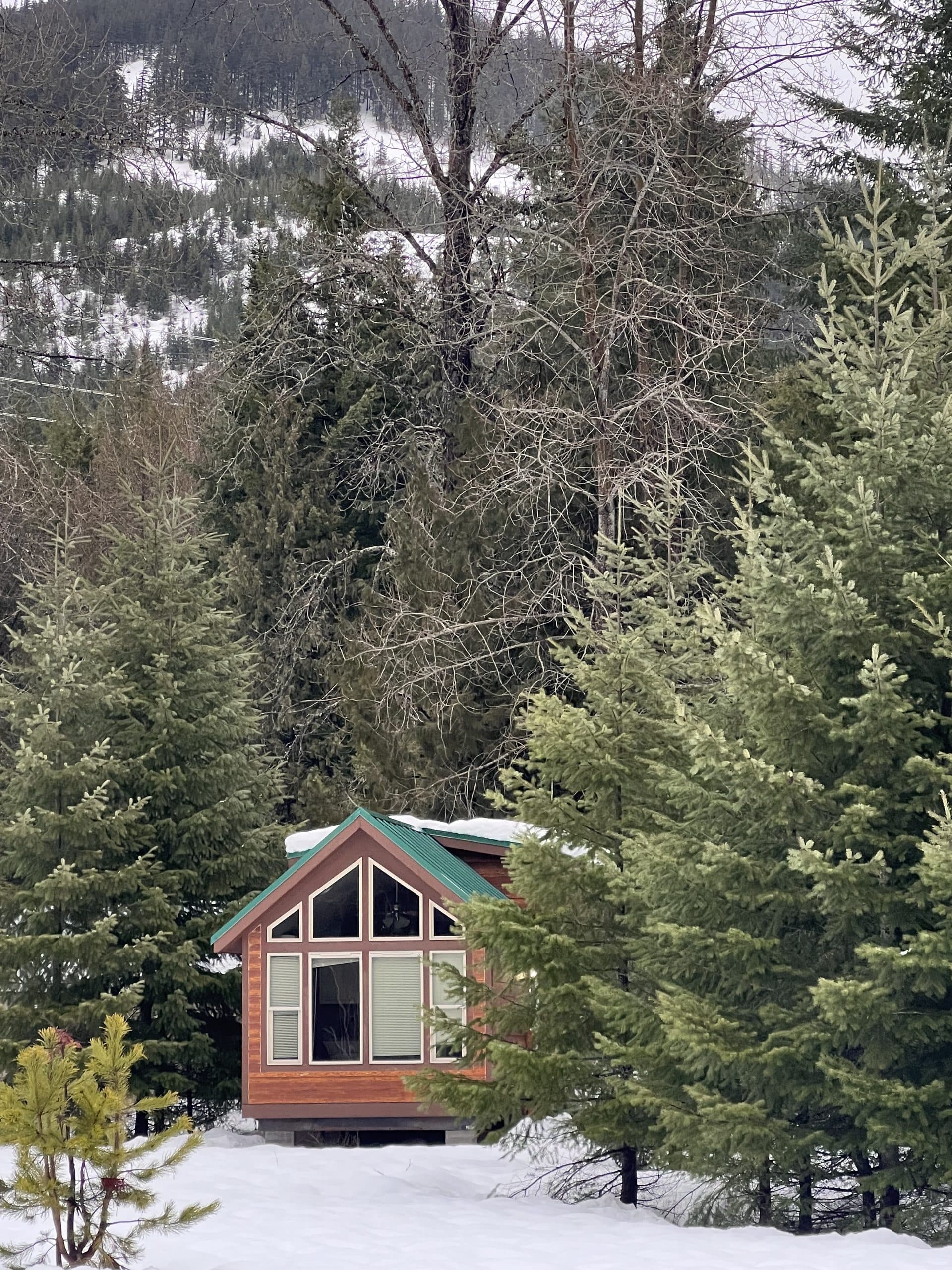
A lot of lodging in the I-90 corridor is built around summer and reads like it. Ours isn't. Every building on this property is hard-sided, insulated, and heated, which is why we can take bookings in February the same way we take them in July.
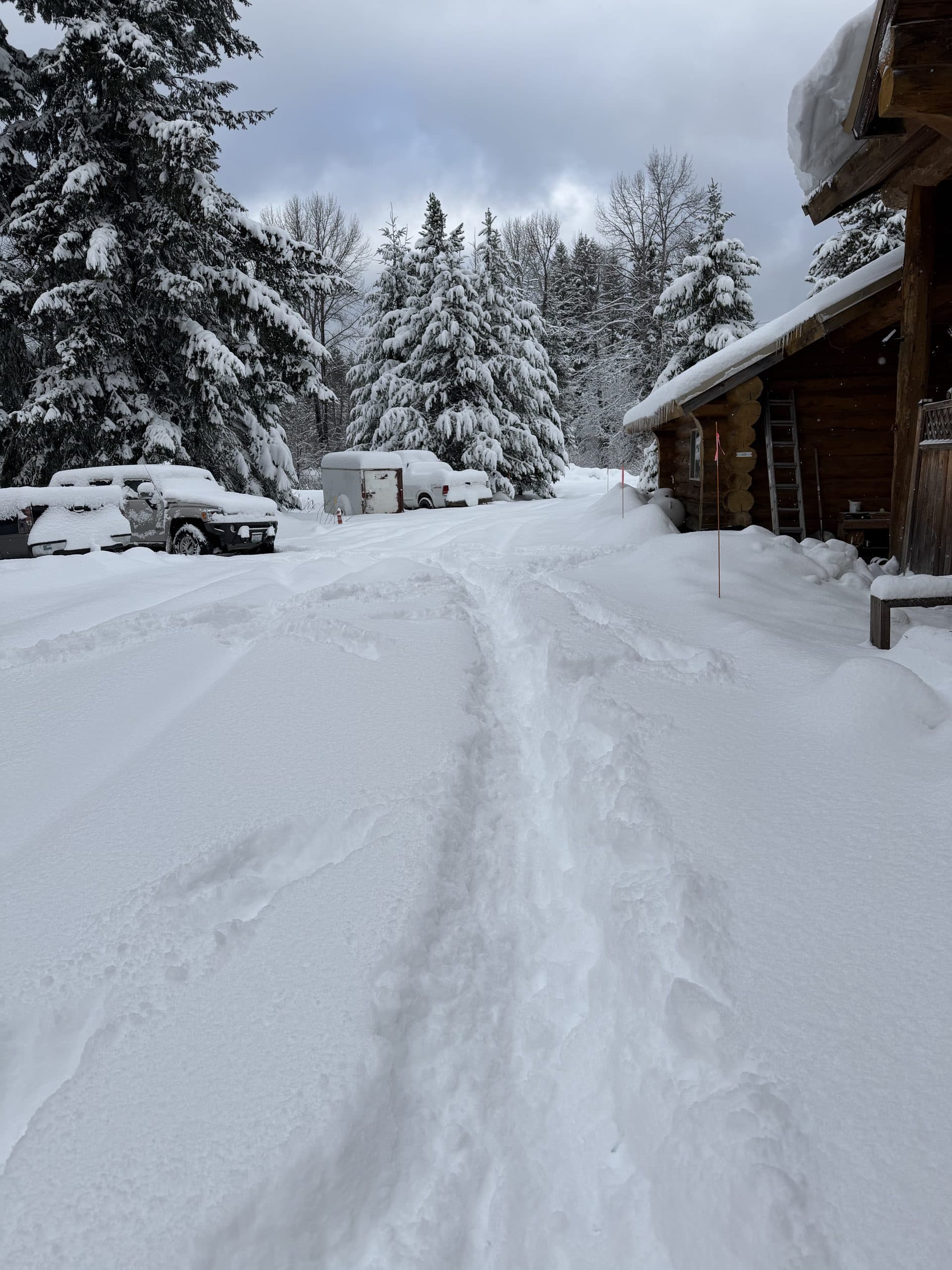
What changes in winter is the property, not the accommodation. The four private lakes stop being the main event — they ice at the edges and the free kayaks and paddle boats go away until spring. What you get instead is 54 acres of quiet snow, the corral fence line with the sheep, alpacas, and horses still out in it, and a season where you can book a weekend three days ahead instead of three months ahead.
If you're weighing which season to come, our guide to the best time to visit Snoqualmie Pass breaks down all four month by month. If you already know you want snow, keep reading.
How Each Building Handles the Cold
This is the part worth getting right before you book. All three sleep warm; they warm up differently, and the bathrooms are not identical.
| Unit | Sleeps | Heat | Bathroom | Kitchen |
|---|---|---|---|---|
| Tiny Homes | Up to 7 | Split heat and A/C | Full bath, shower + tub | Full kitchen, stove + oven |
| Cabins | 2–6 | Heater (no A/C) | Cabins 4–6 have showers | Kitchenette, no stove |
| The Lodge | 14 | Wood fireplace | Yes | Full-size kitchen |
For a ski weekend, the practical answer is usually a tiny home. Split heat holds a steady temperature overnight, the bathroom has a shower and a bathtub, and the full kitchen has a stove and oven — which matters more than it sounds like when the nearest grocery store is 15 minutes away in Cle Elum and you don't want to drive back out for dinner.
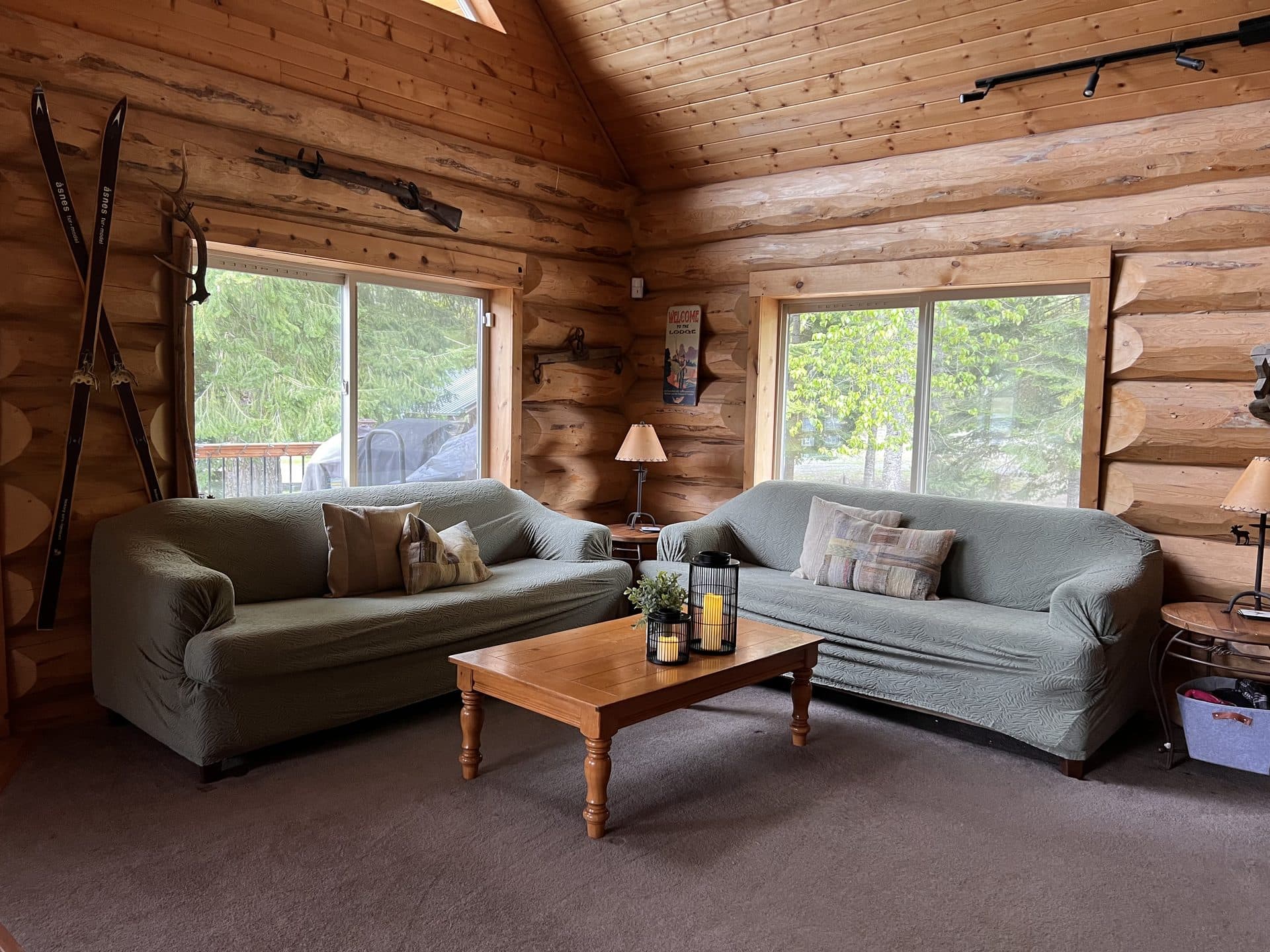
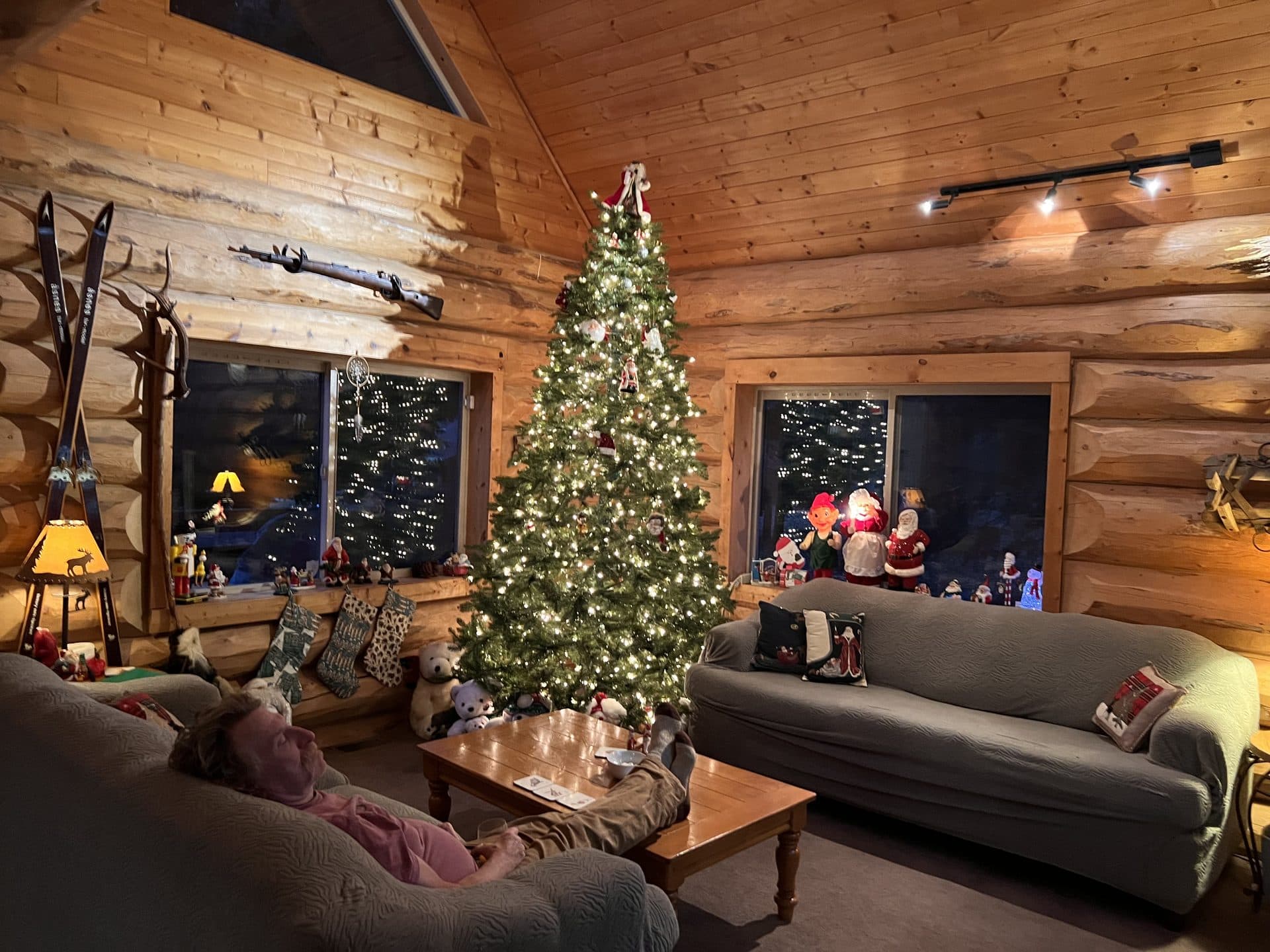
For a group, the 14-person log lodge is the one people picture when they picture a winter trip: vaulted ceilings, a wood fireplace in the main living area, a full-size kitchen, and a movie theater room for the hours after dark, which in December start early.
The cabins are the rustic option, and honestly the one that needs the most disclosure. They have heaters and no A/C, a kitchenette with a refrigerator, microwave, air fryer, and K-cup coffee maker but no stove, and a private porch. Cabins 4 through 6 have showers; cabins 1 through 3 do not. Bedding and linens are available at additional cost or you can bring your own — in winter, bring more than you think.
Skiing and Snow Play Within 20 Minutes
The reason to sleep in Easton rather than at the summit is simple: you get the pass without paying summit prices or parking in summit snow, and you're on the east side, so the drive home doesn't require crossing the pass a second time in the dark.
The Summit at Snoqualmie — about 20 minutes west
The Summit at Snoqualmie runs four base areas on one ticket. Summit West is the beginner and lesson hill, Summit Central is the largest and the most varied, Summit East is the smallest and quietest, and Alpental is the steep one — narrow chutes and expert pitches, and not connected by traverse to the other three. Night skiing and tubing are part of the operation too, which is what makes a same-day trip from a cabin realistic.
Cross-country skiing and snowshoeing at Cabin Creek — same exit as us
This is the local secret and it's almost absurdly close. Cabin Creek Sno-Park sits at I-90 Exit 63 — the same exit you take to reach our driveway. Washington State Parks lists it as a non-motorized site with roughly 21 miles of groomed trail, groomed from December 1 through March 31. No snowmobiles, which is exactly why cross-country skiers use it. Crystal Springs Sno-Park is one exit further west at Exit 62, and Lake Easton has a Sno-Park of its own.
Buy your Sno-Park permit before you drive up
A Washington Sno-Park permit is required to park at these sites in winter. As of the current season, Washington State Parks lists a one-day permit at $25 and a seasonal permit at $50, plus a $70 Special Groomed Trail permit that is required on top of a seasonal permit at Cabin Creek, Crystal Springs, and Lake Easton. Permits are sold November 1 through April 30. Confirm current pricing and buy directly from Washington State Parks. We don't sell them on site.
Closer in, our own on-property hiking trails stay walkable most of the winter with boots or snowshoes, and they're free, permit-free, and about forty steps from your door.
Driving I-90 to Easton in Winter
We're at 3000 U-Fish Rd — I-90 East to Exit 63, then 1.5 miles down the road on your left. From downtown Seattle that's about 80 minutes in good conditions, and the whole trip is freeway right up until the last mile and a half. The one variable is the pass.
Snoqualmie Pass closes or restricts on short notice during storms, and restrictions can appear between the time you leave Seattle and the time you reach North Bend. Two things to do before every winter trip:
- 1.Check the WSDOT real-time Snoqualmie Pass report the morning you drive. It publishes current restrictions, not a forecast.
- 2.Put chains in the car even if you don't expect to use them. WSDOT fines drivers who fail to install chains where signs require them, and studded tires don't substitute — they're also only legal in Washington from November 1 through March 31.
One practical note about our location: we're on the east side of the summit. Coming from Seattle you cross the pass on the way in, so a storm affects your arrival. Coming from Ellensburg, Yakima, or Spokane you never touch the summit at all.
Want the full rundown before you drive? Our guide to driving over Snoqualmie Pass in winter walks through the three chain signs Washington law allows, what each requires of a two-wheel-drive car versus an all-wheel-drive one, and why avalanche control closes I-90 on days with blue sky.
Cell service on the property is limited. Download offline maps before you leave, and if conditions look uncertain, call us at 425-622-2790 — we're standing in the weather you're driving into and we'll tell you straight what it looks like here.
What to Bring for a Winter Stay
Short list, but the winter items are different enough from the summer ones to be worth spelling out.
Leave at home: the fishing license (our lakes are private and don't require one in any season) and anything for the water — the lakes are a spring-through-fall attraction.
Winter Is the Easiest Season to Get a Booking
Our summer weekends go early — June through August carries a 2-night weekend minimum and the calendar fills months out. Winter runs the opposite way. Weeknights are wide open, weekends are bookable much closer in, and the 54 acres you're sharing with a dozen other guests in July are often yours alone in January.
Check-in is 3:00 PM and check-out is 11:00 AM year-round. Early check-in and late check-out are sometimes available in the off-season — worth asking for on a ski day, when 3:00 PM is after last chair.
Not sure a winter cabin is the trip you want? Our glamping page covers how hard-sided lodging works here across all four seasons, and our pet-friendly cabins page covers the dog logistics in more detail.
Winter Cabin Rental FAQ
Explore More Ways to Stay
Ski the Pass. Sleep in the Quiet.
Heated cabins, tiny homes, and a 14-person lodge on 54 private acres — 20 minutes east of Snoqualmie Pass, open all winter.